
MLC rest hours are where good intentions meet a long charter day. The Maritime Labour Convention (MLC 2006) sets minimum rest for every seafarer, yacht crew included, and MLC rest hours are one of the most commonly checked — and commonly breached — requirements at a port state inspection. Getting them right protects the crew from fatigue and the vessel from a detention.
This guide explains the MLC rest-hour limits, the records you must keep, and why charter yachts find them genuinely hard.
1. What the MLC rest-hour rules are
MLC 2006 requires that every seafarer gets adequate rest, defined as minimum hours of rest within fixed periods. It exists to prevent fatigue — a root cause of maritime accidents — and it applies to yacht crew on commercially operated vessels just as it does to merchant seafarers.
2. The actual limits
Under MLC, the minimum hours of rest are:
- At least 10 hours of rest in any 24-hour period, and
- At least 77 hours of rest in any 7-day period.
- Rest may be split into no more than two periods, one of which must be at least 6 hours, with no more than 14 hours between consecutive rest periods.
Flag states may apply the MLC limits or the closely related STCW watchkeeping limits; the numbers above are the common MLC baseline. Either way, the vessel must record against a defined standard.
3. Why it matters
Beyond the legal duty, fatigue is a safety issue: a tired crew makes mistakes on watch, on deck and in the engine room — which is why fatigue awareness features in the safety training run by academies such as our partner Riviera Crew Academy. And practically, rest-hour non-compliance is a frequent finding at MLC inspections — one that can lead to detention and reputational damage for the owner and management company.
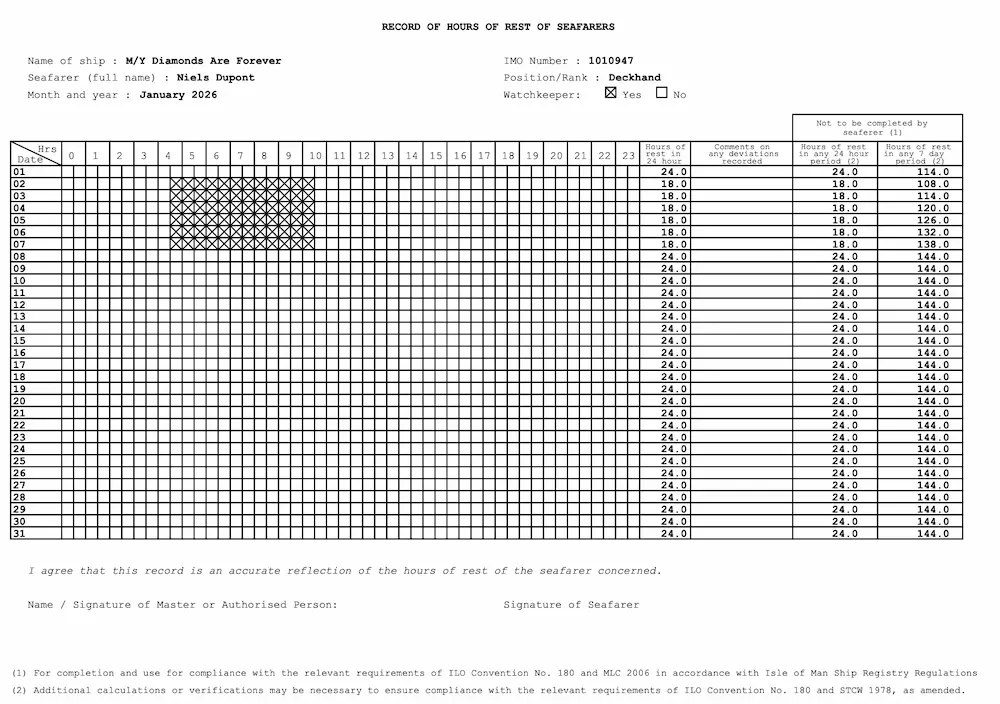
4. Records of rest: the mandatory table
Each seafarer must have records of their daily hours of rest, in a standardised format, signed by both the seafarer and the master (or an authorised person). These records must be kept on board and produced on request. They are the evidence that the limits were actually met — not merely intended.
5. Watchkeeping, drills and exceptions
There are limited, defined provisions: musters, drills and safety-related work may override rest, with compensatory rest to follow; genuine emergencies (safety of the ship or persons) suspend the limits until normality returns. These are narrow exceptions, not a general excuse — and each still has to be recorded.
6. The reality on charter yachts
Charter is where rest hours get difficult. Guest days run long — early breakfast service to late-night turndown — and a small crew covers it all. Without careful planning and honest recording, a charter week can quietly breach the limits. The answer is not to fudge the records but to plan rotations and capture hours accurately, so problems are visible early enough to manage.
7. Who is responsible
The master is responsible for ensuring rest requirements are met and recorded on board; the management company is responsible for providing enough crew and the systems to make compliance realistic. Rest-hour compliance also intersects with fair treatment and pay — part of the broader picture of crew employment and payroll under MLC.
8. Port state control and MLC inspections
Inspectors routinely ask to see rest-hour records and compare them against the operation they observe. Clean, contemporaneous, signed records — consistent with the crew list and the logbook — pass quickly. Gaps, round numbers and back-filled sheets invite a deeper look and, potentially, a detention.
9. Declaring rest hours and generating records
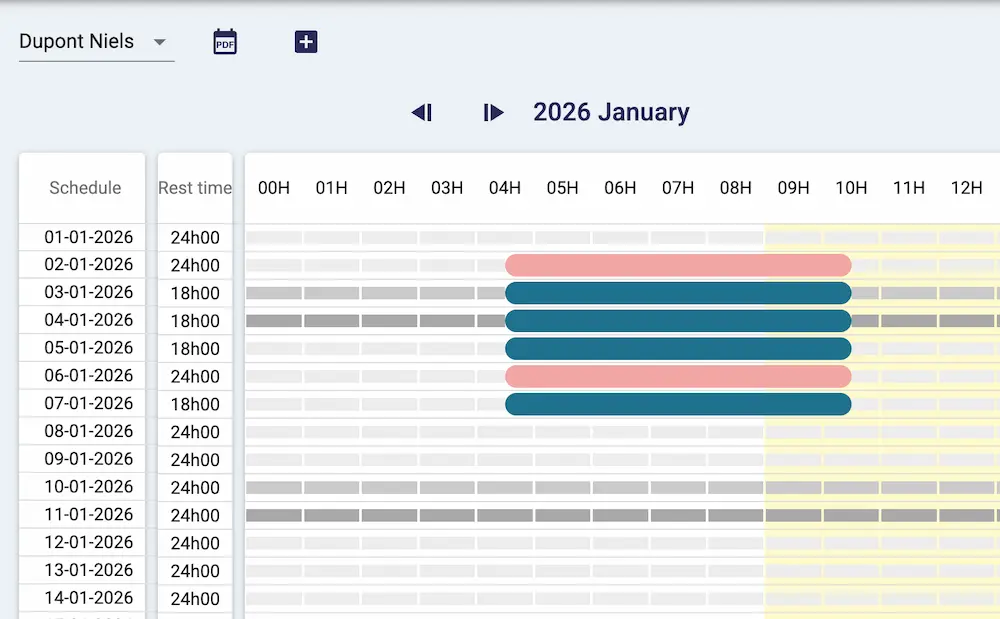
The practical fix is to make declaration effortless and the record automatic. In Scyllastar’s crew management platform, crew log their working and rest hours in an online tool that flags any breach before it happens, and the compliant MLC record sheets generate as ready-to-sign PDFs in one click — per crew member, per month. Compliance becomes something the system watches, not something remembered at inspection time.
Frequently asked questions
What are the MLC rest-hour limits for yacht crew?
Under MLC 2006, every seafarer must get at least 10 hours of rest in any 24-hour period and at least 77 hours in any 7-day period. Rest may be split into no more than two periods, one of which must be at least 6 hours.
Do MLC rest hours apply to yacht crew?
Yes — MLC 2006 applies to crew on commercially operated yachts just as it does to merchant seafarers. Rest-hour compliance is one of the most commonly checked items at a port state inspection.
What records of rest must a yacht keep?
Each seafarer must have a standardised record of daily hours of rest, signed by both the seafarer and the master, kept on board and produced on request. These records are the evidence that the limits were actually met.