
Yacht crew payroll looks simple — pay people each month — and is anything but. Multiple nationalities, a mobile workforce, flag-state rules, social charges and MLC obligations turn it into one of the more technical parts of running a vessel. And underpinning all of it is a duty to pay accurately, on time, and with proper records the crew can rely on.
This guide explains what yacht crew payroll involves, who handles it, and what records the crew are entitled to. It is general information, not tax or legal advice — always use a qualified specialist for a specific situation.
1. What yacht crew payroll actually involves
Yacht payroll covers salaries, agreed allowances and leave, any social security or contributions due, and the issuing of payslips — all under the employment framework set by the vessel’s flag and the crew’s contracts. It sits alongside, but is distinct from, the vessel’s operating financial administration: crew pay is its own workstream, with its own compliance.
2. The Seafarer Employment Agreement (SEA)
Under MLC 2006, every seafarer must have a Seafarer Employment Agreement — a written contract setting out pay, hours, leave, repatriation and conditions. The SEA is the foundation of payroll: it defines what is owed, and it is a document port state control can ask to see. No crew member should be working without one.
3. Flag, residency and tax — the honest version
Tax on yacht crew is genuinely complex and personal. It depends on the crew member’s nationality and tax residency, the flag of the vessel, where they work, and rules such as the seafarers’ earnings deduction that some countries offer. There is no single answer, and the wrong assumption is expensive. Treat this as a matter for a specialist payroll or tax adviser — not for a rule of thumb.
4. Social security and contributions
Depending on the flag, the crew’s circumstances and any applicable conventions, there may be social security or national insurance contributions to account for. MLC also expects seafarers to have social protection. This is another area where the correct treatment varies by case and belongs with a specialist — but the vessel still needs to record whatever is applied.
5. Who runs yacht crew payroll
In practice, payroll is usually run by the management company or by a specialist yacht-crew payroll provider, rather than by the captain. Their job is to calculate pay correctly, handle contributions where due, and issue compliant payslips. What stays with the vessel and the manager is the responsibility to keep every crew member’s employment and pay records organised and accessible.
6. Payslips and records: what crew are entitled to
Crew are entitled to a clear record of what they were paid and why — a payslip showing salary, allowances, any deductions and the net amount. MLC reinforces this: seafarers should receive regular account of payments due and paid. Good payslip records also protect the owner and manager in any dispute over pay.
7. Keeping payroll records
Payslips and payroll documents need to be retained, organised per crew member, and retrievable — for the crew’s own reference, for compliance, and for handovers when someone leaves. Payroll records scattered across emails and personal folders are a liability; centralised, per-person records are an asset at audit and at crew changeover.
8. Centralising payslips per crew member
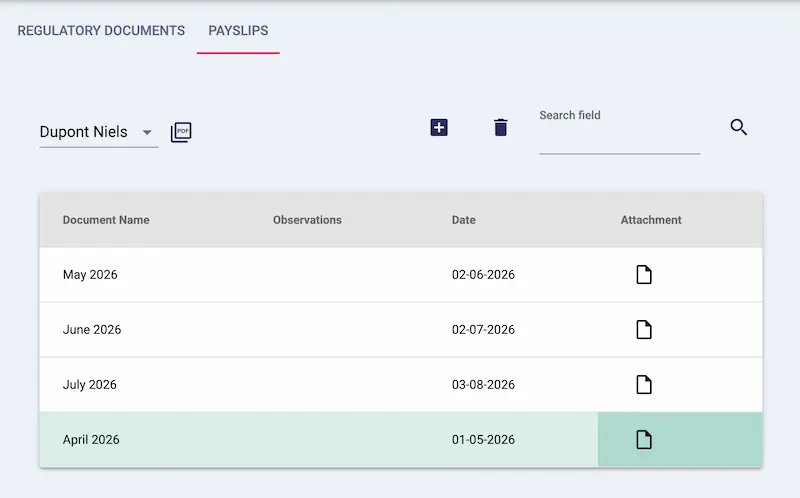
This is exactly where a crew platform helps — not by calculating pay, but by keeping the records straight. In Scyllastar’s crew management platform, managers upload and store each crew member’s payslips in one secure place, organised per person alongside their contracts and certificates. Scyllastar is not a payroll calculator; it is the vault that keeps the paperwork accessible, traceable and ready when a crew member — or an inspector — asks for it.
Frequently asked questions
How does yacht crew payroll work?
Yacht crew payroll covers salaries, allowances and leave, any social security due, and issuing payslips, all under the employment framework set by the vessel’s flag and the crew’s contracts. It is usually run by the management company or a specialist yacht-crew payroll provider.
What is a Seafarer Employment Agreement (SEA)?
Under MLC 2006, every seafarer must have a written Seafarer Employment Agreement setting out pay, hours, leave, repatriation and conditions. The SEA is the foundation of payroll and a document port state control can ask to see.
Do yacht crew pay tax?
It depends on the crew member’s nationality and tax residency, the vessel’s flag, where they work, and reliefs such as the seafarers’ earnings deduction some countries offer. There is no single answer — it should be handled with a specialist payroll or tax adviser.