
The ISM Code — the International Safety Management Code — is the framework that turns “we run a safe boat” into something written down, followed and audited. For a commercial yacht it is not paperwork for its own sake: it is the system that keeps the vessel insurable, chartered and out of trouble at a port state inspection.
This guide explains what ISM requires of a yacht, who owns each part of it, and how the drills, maintenance and records fit together into one Safety Management System.
1. What the ISM Code is
ISM is an IMO code that requires vessels to operate under a documented Safety Management System (SMS): clear procedures for safe operation, defined responsibilities, planned maintenance, drills, and reporting. The principle is simple — write down how you run the vessel safely, do it that way, record that you did, and improve when something goes wrong.
2. Which yachts must comply
ISM applies to yachts operated commercially above the relevant size and tonnage thresholds set by the flag state and the applicable code (for example the Red Ensign Group’s REG Yacht Code). A privately used yacht generally falls outside mandatory ISM, though many owners adopt a proportionate SMS voluntarily. The moment a yacht charters commercially at scale, an SMS becomes part of daily life.
3. The Safety Management System (SMS)
The SMS is the heart of ISM: the manual and the living practice around it. It sets out operational procedures, emergency preparedness, roles and responsibilities, the maintenance regime, and how records are kept. It is only worth anything if the crew actually work to it — an SMS that sits unread in a drawer is the classic audit failure.
4. The DPA — Designated Person Ashore
Every ISM operation has a Designated Person Ashore: the shore-side link between the vessel and the highest level of management, with direct access to the top and responsibility for monitoring safety and for ensuring resources are provided. The DPA is a named individual the crew can escalate to, independent of the commercial chain.
5. Document of Compliance and Safety Management Certificate
ISM compliance is evidenced by two certificates: the Document of Compliance (DOC) held by the operating company, and the Safety Management Certificate (SMC) held by the vessel. Both are issued after audit and must be maintained — which ties ISM directly to the vessel’s wider certificate and flag-state obligations.
6. Drills, maintenance and records
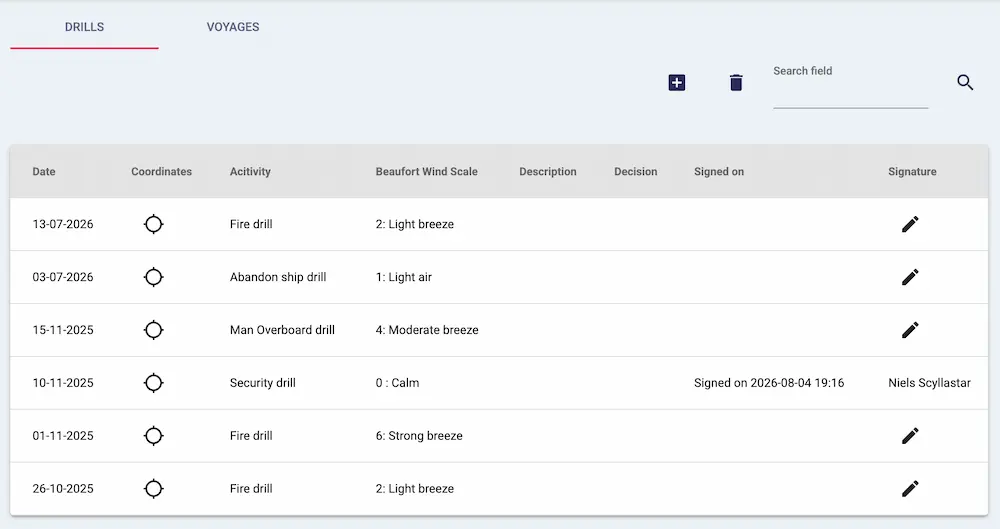
ISM lives on records. Drills must be held and logged, equipment must be maintained to a plan, and the evidence must be retained. This is where ISM overlaps with the rest of the vessel’s systems: drills belong in the logbook, and machinery maintenance runs through a planned maintenance system. An SMS with clean drill and maintenance records is an SMS that passes audit.
7. Audits and non-conformities
ISM is verified by internal audits (the company auditing itself) and external audits (flag or class). Findings are graded from observations to non-conformities to major non-conformities — the last of which can stop the vessel. The goal is not a spotless audit but a system that finds and closes its own gaps before an external auditor does.
8. Near-miss and incident reporting
A functioning SMS actively encourages reporting of near-misses and incidents, without blame, so the operation learns. A vessel that logs near-misses is not a vessel with more problems — it is one that is catching them before they become accidents. Auditors read a healthy reporting culture as a strong sign.
9. Common ISM gaps on yachts
- An SMS manual that no one on board has read or applies.
- Drills logged in bunches just before an audit rather than held on schedule.
- Maintenance tracked informally, with no records to show at audit.
- Near-misses never reported, so the same risks recur.
- Records scattered across paper, laptops and personal folders — impossible to produce quickly.
10. Running your SMS digitally
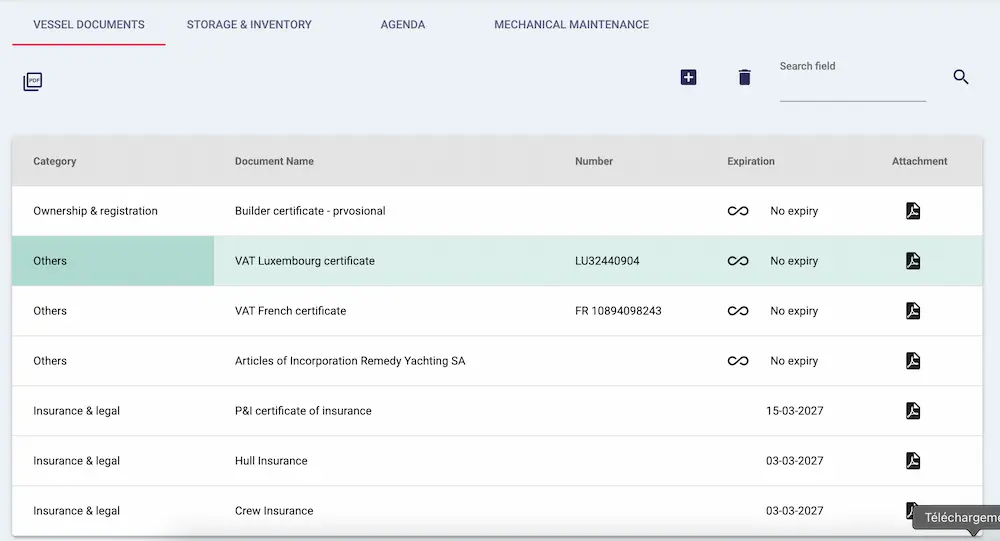
ISM is fundamentally a records-and-procedures discipline, which is exactly what software handles well. In Scyllastar’s vessel management platform, drills, maintenance, certificates and documents live in one system, time-stamped and exportable — so the evidence an auditor asks for is a search, not an archaeology project. The SMS stops being a binder and becomes the way the vessel actually runs.
Frequently asked questions
Which yachts must comply with the ISM Code?
The ISM Code applies to commercially operated yachts above the tonnage and size thresholds set by the flag state and the applicable yacht code, such as the REG Yacht Code. Private yachts generally fall outside mandatory ISM, though many adopt a proportionate system voluntarily.
What is a DPA under the ISM Code?
The DPA (Designated Person Ashore) is the named shore-side link between the vessel and top management, with direct access to the highest level and responsibility for monitoring safety and ensuring resources. Crew can escalate to the DPA independently of the commercial chain.
What is the difference between the DOC and the SMC?
The Document of Compliance (DOC) is held by the operating company; the Safety Management Certificate (SMC) is held by the vessel. Both are issued after audit and must be maintained for the yacht to trade commercially.