
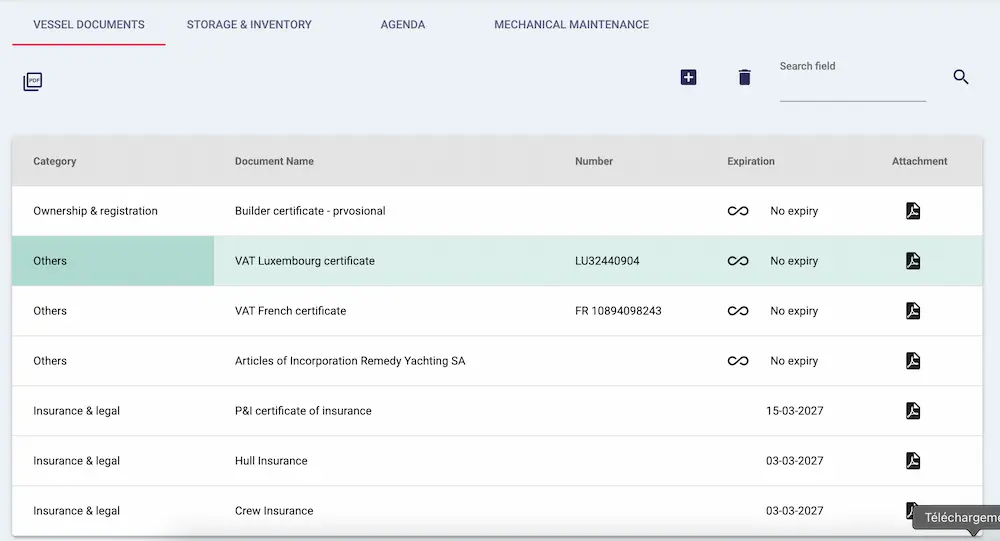
Yacht certificates are the vessel’s passport. Registration, safety, radio, pollution, tonnage, load line, class — each is a document that says the yacht is legally allowed to do what it does. Let one lapse and the yacht can be detained, uninsured or unable to charter, often discovered at the worst possible moment.
This guide walks through the certificates a yacht carries, how the flag state shapes them, and why tracking their expiry is a discipline in itself.
1. Why certificates are the vessel’s passport
Certificates prove compliance to anyone with authority to ask: flag inspectors, port state control, insurers, class surveyors and, eventually, a buyer’s technical adviser. A vessel with a complete, current and well-organised certificate set moves freely and sells cleanly; one with gaps invites scrutiny and delay.
2. Choosing a flag state
The flag state (the registry the yacht is registered with) sets much of the certification regime — the applicable yacht code, survey requirements and official documents. Popular yacht registries include the Red Ensign Group members (Cayman Islands, Isle of Man, Malta, Gibraltar, Jersey) among others. The choice affects everything downstream: which code applies, how surveys are handled, and what the official logbook and certificates look like.
3. The key certificates every yacht carries
While the exact set depends on size, use and flag, most yachts carry some combination of:
- Certificate of Registry (proof of nationality and ownership).
- Tonnage Certificate and, where applicable, Load Line Certificate.
- Safety certificates for construction, equipment and radio.
- Pollution prevention certificates (IOPP / IAPP and related).
- Insurance and, for larger vessels, class certificates.
4. Extra certificates for commercial yachts
A commercially operated yacht carries more: compliance with the applicable commercial yacht code (for example the REG Yacht Code), the ISM Safety Management Certificate, an ISPS International Ship Security Certificate, and MLC compliance documentation. Commercial use raises the bar on both the number of certificates and the scrutiny they attract.
5. Where vessel and crew certification meet
Vessel certificates are only half the picture — the crew must be certificated too. A fully certified yacht crewed by someone whose ticket has lapsed is still a problem. Vessel documents and crew qualifications such as STCW certificates and the ENG1 medical should be tracked with the same rigour, because port state control checks both.
6. Tracking expiry: the silent risk
Certificates do not fail loudly — they simply expire on a date, and the risk is invisible until someone checks. The discipline that prevents trouble is boringly simple: every certificate stored with its expiry date, and an alert well before renewal is due. A certificate that lapses the week before a charter or an inspection is almost always a tracking failure, not a surprise.
7. Surveys and renewals
Many certificates are tied to surveys on a fixed cycle. Planning renewals around yard periods keeps the vessel operational and avoids last-minute scrambles — and where a planned maintenance scheme is approved in lieu of survey, the vessel’s own records carry part of the load, provided they are complete and current.
8. Port state control: what they check
Port state control officers verify that the vessel’s certificates are present, valid and consistent with what they see on board, and that the crew are properly certificated and rested. Deficiencies can lead to detention. A tidy, current certificate set — produced quickly on request — is the fastest way through an inspection.
9. One vault, with expiry alerts
The safest place for a yacht’s certificates is a single, secure vault that tracks every expiry and alerts before renewal. In Scyllastar’s vessel management platform, vessel and crew documents live together with their expiry dates monitored automatically — so nothing lapses unnoticed, and the whole set is one search away when an inspector, insurer or buyer asks.
Frequently asked questions
What certificates does a yacht need?
Most yachts carry a Certificate of Registry, tonnage and where applicable load line certificates, safety certificates for construction, equipment and radio, and pollution-prevention certificates. Commercial yachts add a commercial yacht code, an ISM Safety Management Certificate, an ISPS security certificate and MLC documentation.
What does the flag state determine for a yacht?
The flag state — the registry the yacht is registered with — sets the applicable yacht code, survey requirements and official documents such as the logbook. It shapes much of the certification regime, which is why the choice of flag matters from day one.
What happens if a yacht certificate expires?
An expired certificate can lead to detention at port state control, invalidate insurance, or stop the yacht chartering. Because certificates expire silently on a fixed date, tracking expiry and renewing in advance is essential.